
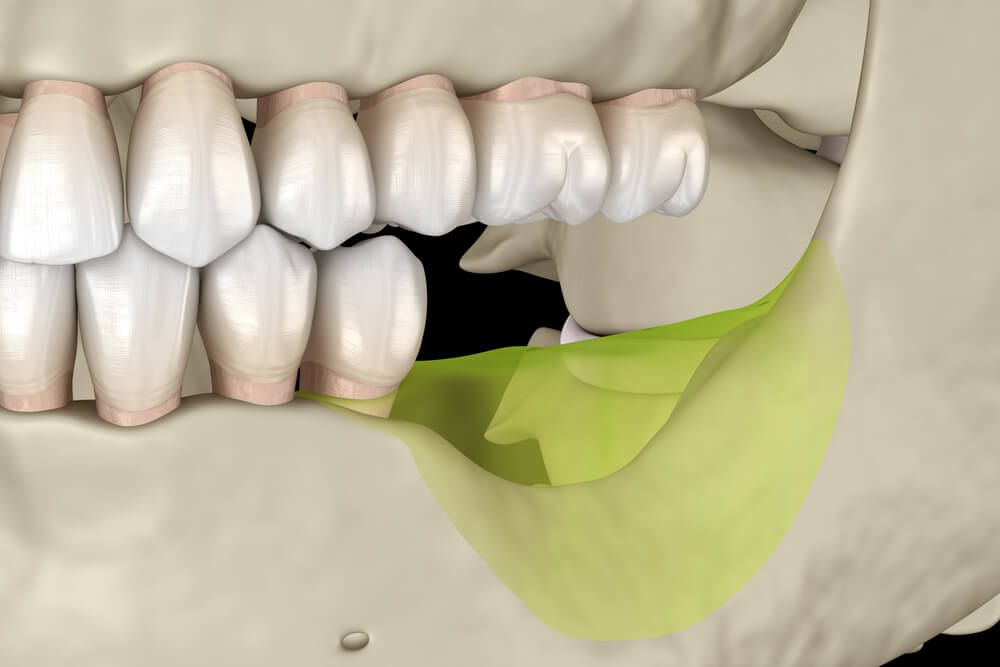
If you are considering a dental implant, you may be told that you also need a bone graft.
That can be confusing.
If the missing tooth is the problem, why does the bone need treatment too?
The reason is that dental implants depend on adequate bone for support.
Why Does Bone Matter for an Implant?
A dental implant is placed directly into the jawbone.
For predictable placement, there needs to be enough bone around the implant in the appropriate position.
The dentist evaluates both:
- Bone height
- Bone width
Simply having some bone is not always enough.
It needs to be located where the replacement tooth should ideally emerge.
What Happens to Bone After a Tooth Is Lost?
The bone surrounding a natural tooth exists partly because that tooth is present and functioning.
After extraction, the jawbone begins remodeling.
The ridge can gradually become:
- Narrower
- Shorter
- More irregular
This process can continue over time.
What Is a Dental Bone Graft?
Bone grafting involves placing graft material in an area where additional bone volume is desired.
Over time, the material helps support the body’s healing and bone-remodeling process.
There are several different grafting techniques and materials depending on the clinical situation.
When Can Bone Grafting Be Performed?
Grafting may be completed:
- At the time of extraction
- Before implant placement
- At the same time as implant placement
The timing depends on how much bone is present and how much reconstruction is needed.
What Is Socket Preservation?
When a tooth is extracted, graft material may sometimes be placed into the socket to help preserve ridge dimensions during healing.
This does not guarantee that future implant placement will require no additional grafting, but it can help preserve the site.
Does Every Implant Need a Bone Graft?
No.
Many patients have adequate bone for implant placement without grafting.
A graft should be recommended because the anatomy requires it—not simply because an implant is being placed.
What If the Tooth Has Been Missing for Years?
Bone shrinkage may be more significant after long-term tooth loss.
However, that does not automatically mean an implant is impossible.
Related: Can You Get a Dental Implant Years After Losing a Tooth?
Does Bone Grafting Make the Implant Process Longer?
Sometimes.
If substantial bone must be regenerated before implant placement, the graft may require its own healing period.
Smaller grafts performed simultaneously with implant placement may not add a completely separate stage.
Related: How Long Does the Dental Implant Process Take?
Is Bone Grafting Painful?
The area is anesthetized during treatment.
Postoperative swelling and tenderness depend on the size and type of graft.
More extensive grafting generally creates a different recovery than a small graft placed around an implant.
Related: Are Dental Implants Painful? What to Expect
How Do You Know Whether You Need a Graft?
Clinical examination and appropriate imaging help determine:
- Ridge width
- Bone height
- Implant position
- Nearby anatomical structures
- Existing defects
Three-dimensional imaging can be particularly useful for implant planning.
Frequently Asked Questions
Is bone grafting always required after an extraction?
No.
Can an implant and bone graft be placed together?
Yes, in selected situations.
Does a graft guarantee implant success?
No procedure can guarantee success. Grafting is intended to create more favorable anatomy for implant placement.
Can you avoid a graft by using a smaller implant?
Sometimes implant dimensions can be modified, but compromising implant position simply to avoid grafting is not always appropriate.
The Bottom Line
Bone grafting is not an automatic part of every dental implant.
It is used when the available anatomy does not provide enough bone in the correct position for predictable treatment.
At Chastain Dental Studio, we evaluate implant sites carefully for patients from Chastain Park, Buckhead, Sandy Springs, and North Atlanta and recommend grafting only when it provides a meaningful benefit to the implant plan.