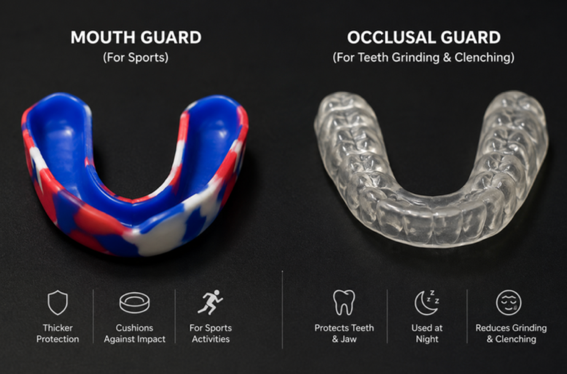
They may look somewhat similar, but a nightguard and a sports mouthguard are not interchangeable.
One is designed primarily for grinding.
The other is designed for impact.
What Is a Nightguard?
A nightguard is generally worn during sleep to protect the teeth from repetitive grinding or clenching forces.
Depending on the design, it may be fabricated from different dental materials and thicknesses.
Its goals can include:
- Protecting enamel
- Protecting crowns and fillings
- Reducing direct tooth-to-tooth wear
- Providing a controlled biting surface
Related: Do I Need a Nightguard? Signs You Grind Your Teeth at Night
What Is a Sports Mouthguard?
A sports mouthguard is designed to absorb and distribute forces from athletic impacts.
It can help protect:
- Teeth
- Lips
- Cheeks
- Oral soft tissues
Sports guards are commonly used for contact and collision sports.
Why Can’t You Use a Nightguard for Sports?
Nightguards are not necessarily designed with the thickness, coverage, flexibility, or impact absorption needed for athletics.
A hard grinding appliance may behave very differently during facial trauma.
Can You Sleep in a Sports Guard?
A sports guard may feel bulky and may not provide the controlled bite relationship intended for a nighttime grinding appliance.
The materials and design goals are different.
What Is a Custom Sports Mouthguard?
A custom sports mouthguard is made from an impression or scan of your teeth.
Advantages can include:
- Better retention
- More precise fit
- Controlled thickness
- Improved comfort
- Easier speech compared with some poorly fitting generic guards
What About Boil-and-Bite Mouthguards?
Boil-and-bite guards are widely available and can provide a more customized fit than completely stock appliances.
For some athletes they may be adequate.
A custom guard may be preferable when fit, retention, comfort, or specific dental conditions are important.
What If You Have Braces?
Sports protection becomes particularly important because an impact can injure both the teeth and soft tissues around orthodontic appliances.
The mouthguard must allow appropriate space for the orthodontic treatment.
What If You Have Veneers or Crowns?
Patients with extensive restorative dentistry may benefit from carefully fitted protection during sports and, separately, during nighttime grinding if bruxism is present.
Frequently Asked Questions
Can one appliance serve both purposes?
Usually, separate appliances are preferable because the design requirements differ.
Do all athletes need custom mouthguards?
Not necessarily, but athletes participating in higher-risk sports should use appropriate protection.
Are nightguards soft or hard?
Different designs and materials exist depending on the patient’s needs.
Can children use sports mouthguards?
Yes. Fit should be monitored as teeth and jaws change.
The Bottom Line
A nightguard protects primarily against repetitive grinding forces.
A sports mouthguard protects primarily against sudden impact forces.
At Chastain Dental Studio, we help patients throughout Chastain Park, Buckhead, Sandy Springs, and North Atlanta choose an appliance based on what the teeth actually need protection from.