
You brush your teeth, spit into the sink, and notice pink or red around the toothpaste.
Should you be worried?
Occasional irritation can happen, but gums that consistently bleed when brushing or flossing shouldn’t simply be considered normal.
Why Do Healthy Gums Usually Not Bleed?
Plaque contains bacteria that accumulate around the gumline.
If plaque isn’t adequately removed, the gums can become inflamed. This early stage of gum disease is commonly called gingivitis.
Inflamed gum tissue tends to bleed more easily when disturbed by brushing or flossing.
Related: How Do I Know If I Have Gum Disease?
Does Bleeding Mean I Should Stop Flossing?
Usually, no.
If plaque-induced inflammation is causing the bleeding, avoiding the area may allow more plaque to accumulate.
Consistent but gentle brushing and proper cleaning between the teeth are important.
However, aggressive flossing or brushing can traumatize healthy gum tissue, so technique matters.
What If My Gums Bleed Every Day?
Persistent bleeding deserves evaluation.
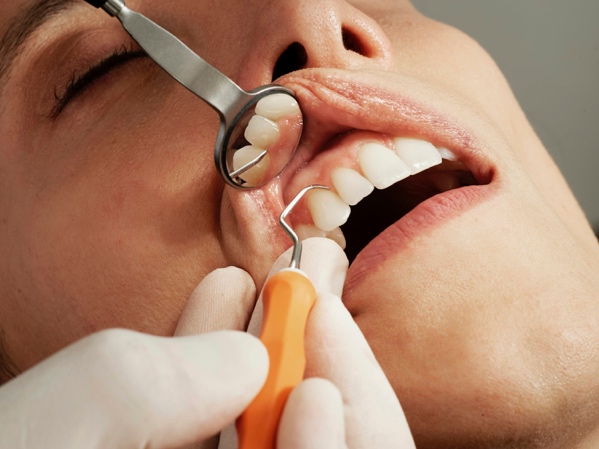
Your dentist or hygienist may measure the spaces around your teeth and evaluate whether inflammation is limited to the gums or whether periodontal disease has affected the supporting structures around the teeth.
This distinction matters because treatment can be different.
Related: Regular Cleaning vs. Deep Cleaning: What’s the Difference?
Can Gum Disease Exist Without Pain?
Yes.
Periodontal disease is particularly important because significant gum and bone changes can occur without severe discomfort.
Possible signs include:
- Bleeding gums
- Persistent bad breath
- Gum recession
- Loose teeth
- Tooth movement
- Swollen gums
- Increasing spaces between teeth
Related: Why Are My Gums Receding?
Can Bleeding Gums Be Caused by Something Else?
Yes.
Changes in oral hygiene, aggressive brushing, medications, hormonal changes, certain systemic conditions, and other factors can contribute.
That’s why persistent bleeding shouldn’t automatically be self-diagnosed.
Frequently Asked Questions
Should I floss if my gums bleed?
In many cases, yes. Gentle and consistent plaque removal can improve inflammation, but persistent bleeding should be evaluated.
Does bleeding automatically mean periodontal disease?
No. Gingivitis can cause bleeding without the bone loss associated with periodontitis.
Can gum disease be reversed?
Early gingivitis can often improve significantly with effective plaque control and professional care. Periodontitis involving attachment or bone loss requires ongoing management.
The Bottom Line
If your gums occasionally bleed after you haven’t flossed in months, inflammation may be the explanation. But repeated bleeding shouldn’t simply be ignored.
At Chastain Dental Studio, we evaluate gum health for patients from Chastain Park, Buckhead, Sandy Springs, and surrounding Atlanta communities and recommend treatment based on the actual periodontal findings.