
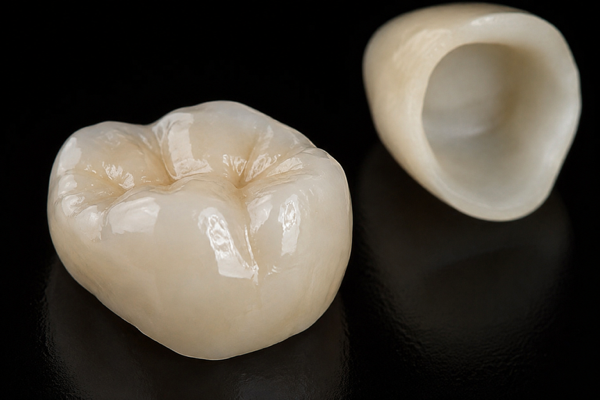
A filling and a crown can both repair damaged teeth, but they serve different purposes.
The central question is usually:
How much healthy, reliable tooth is left?
What Does a Filling Do?
A filling replaces a localized portion of damaged or decayed tooth.
It works particularly well when enough strong tooth structure remains around it.
Composite fillings can also bond to the surrounding tooth.
Related: White Fillings vs. Silver Fillings: What’s the Difference?
What Does a Crown Do?
A crown surrounds and covers the tooth more extensively.
This allows the restoration to help protect weakened cusps and distribute chewing forces across the tooth.
When Is a Filling Usually Appropriate?
A filling may make sense when:
- Damage is relatively localized
- Remaining tooth walls are strong
- There is no major structural crack
- The restoration will not occupy an excessive portion of the tooth
When Does a Crown Become More Appropriate?
A crown may make more sense when:
- A large portion of the tooth is already restored
- One or more cusps are cracked
- Significant tooth structure is missing
- The tooth has fractured
- Remaining walls are thin
- Bite forces create significant fracture risk
Related: Do I Really Need a Crown? How Dentists Decide
Why Not Just Make the Filling Bigger?
At some point, the restoration becomes large while the natural tooth becomes small.
The filling itself may survive while the thin remaining tooth fractures around it.
This is particularly important in molars, which receive substantial chewing forces.
Can Grinding Change the Decision?
Yes.
Heavy clenching and grinding can increase stress on both natural teeth and restorations.
Related: Do I Need a Nightguard? Signs You Grind Your Teeth at Night
Frequently Asked Questions
Is a crown stronger than a filling?
A crown generally provides broader structural protection, but that doesn’t mean every tooth benefits from one.
Are crowns more invasive?
Yes. A crown typically requires more tooth preparation than a small filling, which is why it should have a meaningful indication.
Can a large filling last for years?
Certainly. Size is only one factor.
The Bottom Line
The best restoration is not automatically the smallest or the largest treatment.
It is the least invasive restoration that can predictably protect the tooth.
That is the philosophy we use at Chastain Dental Studio for patients in Chastain Park, Buckhead, Sandy Springs, and surrounding North Atlanta.