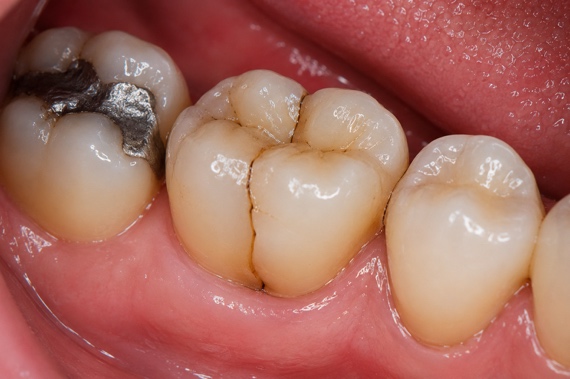
Cracked teeth can be frustrating because the symptoms are not always predictable.
A tooth may hurt intensely one day and feel completely normal the next.
Some cracks are minor. Others can eventually threaten whether the tooth can be saved.
What Causes Teeth to Crack?
Common contributors include:
- Large existing fillings
- Grinding and clenching
- Biting hard objects
- Trauma
- Repeated chewing forces
- Natural weakening over time
- Sudden temperature changes
What Does a Cracked Tooth Feel Like?
Possible symptoms include:
- Sharp pain when biting
- Pain when releasing your bite
- Cold sensitivity
- Intermittent discomfort
- Difficulty identifying which tooth hurts
- Sensitivity to sweets
- Gum irritation around one area
Related: Why Does My Tooth Hurt When I Bite Down?
Do All Cracks Need Treatment?
No.
Teeth naturally develop superficial craze lines in enamel over time. These may have little or no clinical significance.
Deeper structural cracks are different.
The treatment depends on the location, depth, symptoms, remaining tooth structure, and whether the crack extends below the gumline or into the root.
How Are Cracked Teeth Diagnosed?
Your dentist may use:
- Bite testing
- Visual examination
- Magnification
- Transillumination
- Periodontal measurements
- Temperature testing
- X-rays
- Evaluation of existing restorations
Not every crack appears clearly on an X-ray.
Related: Why Does My Tooth Hurt Even Though the Dentist Says Nothing Is Wrong?
What Are the Treatment Options?
Depending on severity, treatment may range from:
- Monitoring
- Adjusting bite forces
- Replacing a restoration
- Dental bonding
- Crown placement
- Root canal treatment when the nerve becomes irreversibly affected
- Extraction when a crack makes the tooth non-restorable
Why Are Crowns Sometimes Recommended?
If a crack compromises a cusp but the tooth remains restorable, covering the tooth can help reduce flexing of the cracked segments.
Related: Do I Really Need a Crown? How Dentists Decide
Can Grinding Make Cracks Worse?
Yes.
Grinding and clenching repeatedly expose teeth to significant forces and can contribute to propagation of existing cracks.
Related: Do I Need a Nightguard? Signs You Grind Your Teeth at Night
When Does a Cracked Tooth Become an Emergency?
Seek prompt evaluation when a crack is associated with:
- Severe or increasing pain
- Significant swelling
- Facial swelling
- Trauma
- A large piece of the tooth breaking away
- Fever or other signs of infection
- Difficulty chewing or closing your teeth normally
Facial swelling that affects breathing or swallowing requires urgent medical attention.
Frequently Asked Questions
Can a cracked tooth heal itself?
No. Tooth structure does not biologically fuse back together like a broken bone.
Does every cracked tooth need a crown?
No. Treatment depends on the type and extent of the crack.
Can a cracked tooth eventually need extraction?
Unfortunately, yes. Deep cracks extending significantly into the root can make a tooth impossible to predictably restore.
Should I wait until it hurts badly?
Persistent biting pain or recurring symptoms should be evaluated before the tooth sustains additional damage.
The Bottom Line
Not every line in a tooth is dangerous, but a true structural crack deserves careful evaluation.
At Chastain Dental Studio, our goal is to determine how significant the crack actually is and recommend the most conservative predictable treatment. For patients in Chastain Park, Buckhead, Sandy Springs, and North Atlanta, that means preserving the natural tooth whenever reasonably possible while recognizing cracks that create a meaningful risk of further fracture.