
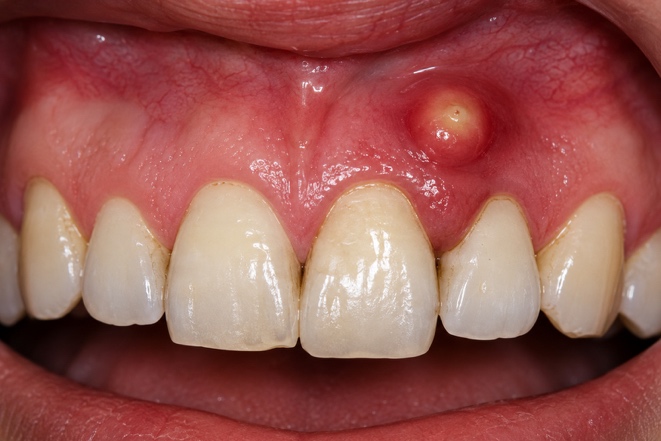
A dental abscess is an infection associated with a tooth or the tissues surrounding it.
Some abscesses cause intense pain.
Others can develop with surprisingly little discomfort.
What Causes a Dental Abscess?
Possible causes include:
- Deep decay
- Infection of the dental pulp
- Cracked teeth
- Trauma
- Advanced periodontal disease
- Failed previous dental treatment
Bacteria can gain access to deeper tissues and create an infection around the root or gums.
Common Symptoms
Signs may include:
- Persistent toothache
- Pain when biting
- Swelling near a tooth
- A bump or “pimple” on the gum
- Bad taste
- Drainage
- Temperature sensitivity
- Facial swelling
- Fever
- Tender lymph nodes
What Is a Gum Pimple?
A small bump on the gum near a tooth can sometimes represent a drainage pathway from a chronic infection.
The tooth may actually feel better because pressure is draining.
That does not necessarily mean the infection is gone.
Can an Abscess Exist Without Pain?
Yes.
This is one of the reasons dental infections should not be judged by pain alone.
A tooth whose nerve has died may stop producing intense pain even though infection remains around the root.
Do Antibiotics Cure a Dental Abscess?
Not usually by themselves.
Antibiotics can be appropriate when infection is spreading or systemic symptoms are present.
However, the underlying source often still needs definitive dental treatment.
Depending on the tooth, that may involve:
- Root canal therapy
- Drainage
- Periodontal treatment
- Extraction
What Happens If You Ignore It?
Dental infections can spread into surrounding tissues.
In some situations, swelling can become significant and extend into the face or neck.
Related: Swollen Face From a Tooth Infection: Is It an Emergency?
When Should You Call a Dentist?
Contact a dentist promptly when you notice:
- Persistent tooth pain
- Gum swelling
- Drainage
- A gum bump
- Facial swelling
- Fever associated with dental symptoms
- Increasing tenderness
Related: Toothache: When Should You See a Dentist?
When Does It Become a Medical Emergency?
Rapidly increasing facial or neck swelling, difficulty swallowing, difficulty breathing, or severe systemic illness requires urgent medical evaluation.
Dental infections can occasionally spread into spaces that affect the airway.
Frequently Asked Questions
Can an abscess pop on its own?
It can drain, but drainage does not necessarily eliminate the underlying infection.
Does every abscess require antibiotics?
No. Antibiotic decisions depend on the clinical presentation and whether infection is spreading or causing systemic symptoms.
Will the infection go away if the pain stops?
Not necessarily.
Can an infected tooth be saved?
Many can, depending on the condition of the tooth and surrounding structures.
The Bottom Line
A dental abscess is not something to simply watch indefinitely.
At Chastain Dental Studio, we evaluate the source and severity of dental infections so the appropriate treatment can be determined. For patients in Chastain Park, Buckhead, Sandy Springs, and North Atlanta, prompt evaluation is particularly important when pain is accompanied by swelling, fever, or signs that infection is spreading.