You schedule what you assume will be a routine cleaning.
After your examination, your dental team tells you that you need a deep cleaning instead.
For many patients, that can feel confusing—especially if your gums do not hurt.
So why would a dentist recommend scaling and root planing?
A Deep Cleaning Should Have a Diagnosis Behind It
Scaling and root planing is generally recommended when there is evidence of periodontal disease.
The recommendation should not simply be:
“You have a lot of tartar.”
Instead, your dental team should be able to explain the findings supporting the diagnosis.
These may include:
- Deep periodontal pockets
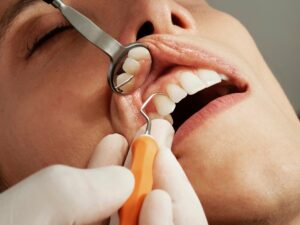
- Bleeding on probing
- Inflammation
- Tartar beneath the gumline
- Clinical attachment loss
- Bone loss visible on dental X-rays
- Gum recession
- Tooth mobility
Related: Regular Cleaning vs. Deep Cleaning: What’s the Difference?
What Are Periodontal Pockets?
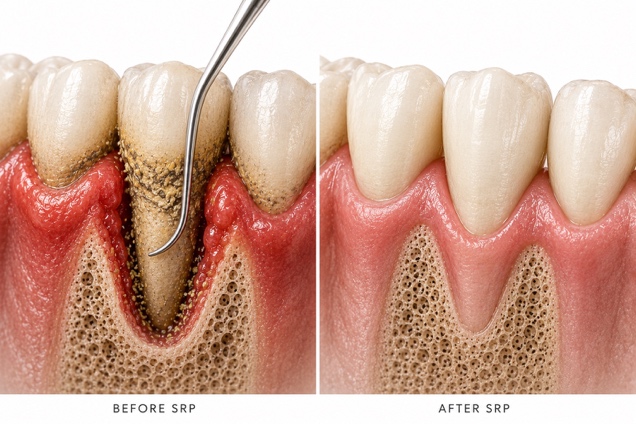
The gums naturally form a shallow space around each tooth.
When periodontal inflammation damages the supporting tissues, this space can become deeper.
The deeper the pocket, the more difficult it becomes to clean effectively with a toothbrush and floss alone.
Bacteria and hardened tartar can accumulate along the root surface.
What Does Bone Loss Have to Do With It?
Periodontitis affects more than the visible gums.
It can damage the supporting structures around a tooth, including periodontal ligament and bone.
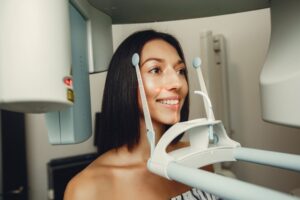
Dental X-rays may help evaluate whether the bone surrounding the teeth has been lost over time.
This distinction separates uncomplicated gingivitis from more advanced periodontal disease.
Related: Can Gum Disease Be Reversed?
What If My Gums Don’t Hurt?
Periodontal disease can be surprisingly quiet.
Some patients with significant bone loss experience little or no pain.
Possible warning signs include:
- Bleeding when brushing
- Persistent bad breath
- Gum recession
- Loose teeth
- Changing spaces between teeth
- Tooth movement
But some people notice almost nothing.
Related: How Do I Know If I Have Gum Disease?
Why Can’t Antibiotics Replace the Cleaning?
Periodontal disease generally involves bacterial deposits attached to the tooth and root surfaces.
Simply taking an antibiotic does not mechanically remove hardened tartar or calculus.
Treatment focuses on disrupting and removing the deposits contributing to inflammation.
Will My Gums Grow Back Afterward?
Inflamed tissue may tighten and become healthier after treatment.
However, periodontal treatment does not automatically regenerate bone or gum tissue that has already been permanently lost.
The primary goal is to control the disease and reduce the risk of additional destruction.
What Happens If I Decline?
The consequences depend on how active and advanced the disease is.
Periodontitis can progress over time and lead to additional bone loss, recession, mobility, shifting teeth, and eventually tooth loss.
Related: What Happens If Gum Disease Goes Untreated?
Can I Ask to See the Measurements and X-Rays?
Absolutely.
Patients should understand the reason for treatment.
At Chastain Dental Studio, we want you to know what we are seeing—not simply be told that you “need a deep cleaning.”
Frequently Asked Questions
Does bleeding automatically mean I need SRP?
No. Gingivitis can cause bleeding without periodontal bone loss.
Does a 4-mm pocket automatically mean deep cleaning?
No single pocket measurement should necessarily determine the entire treatment plan.
Can periodontal disease come back?
Yes. Periodontitis is generally managed rather than considered permanently cured.
Do smokers always have bleeding gums?
Interestingly, smoking can sometimes suppress visible bleeding even while periodontal disease is present.
The Bottom Line
A deep cleaning should be based on an actual periodontal diagnosis, not simply the presence of plaque or tartar.
At Chastain Dental Studio, we explain the pocket measurements, bone levels, inflammation, and other findings before recommending treatment. For our patients throughout Chastain Park, Buckhead, Sandy Springs, and North Atlanta, understanding why you need treatment is an important part of the treatment itself.